

Joy and its consequences

1.
I was telling my partner about an opportunity I’d been approached for. He got very excited, and I told him to rein it in and not jinx it. Last year, a couple of promising projects had simply disappeared. It wasn’t the first time this had happened, but when work falls through, it usually does so with some explanation, leaving little room for magical thinking. The one that stayed with me was a book project on a celebrated Indian film. I’d told a few close friends about it, and everything was set to begin when the correspondence stopped without even the token excuse.
I don’t believe in jinxing. But I do understand why the idea exists. To temper our joy is a way to feel less foolish if it falls through.
2.
Despite the fact that we are always in pursuit of it, we have a strange relationship with joy.
I carry it with a tiny knot. In the midst of joy, I am usually also anticipating, not in a pragmatic but in an ominous way, that something is about to go wrong.
It’s not far from the idiom of my childhood, “Don’t laugh too much, you’d have to cry soon.” If my mother heard my sister and me laughing too loudly at our games, she’d throw that line at us. It was actually true. The weather of our home was entirely up to my father, who could swing quickly between joy and despair, love and anger. We had assessed, and who can blame us for this, that no matter how much we tiptoed, preventing any reasons for him to be upset, he would be upset anyway. We concluded it was joy itself that irked him. It seemed like the best explanation.
But it is only that. At best, an explanation.
We think of everything in cause and effect; that is how we make meaning, but when randomness topples that equation and creates gaps, magical thinking makes its way. And maybe it is not even randomness or the entire absence of a cause, but the idea that pain persists despite virtue or goodness, despite doing whatever you think is right. In an untimely death, an unexplainable illness, an accident, or any of the hundred other ways randomness asserts in our lives, this equation with goodness goes further askew, and it seems easy to pin joy itself as attracting its reversal.
3.
Psychologist Mohsen Joshanloo and philosopher Dan Weijers, in their cross cultural review on attitudes towards happiness, note that happiness tends to cause sadness is actually a widespread belief:
In Korea, there is a common belief that if someone is happy now, they’re likely to be less happy later. In Iran, similar idioms pervade: crying will come after laughing, we laughed a lot, then we will come to its harm, laughing loudly wakes up sadness. In Japan, they cite another research (Uchida and Kitayama, 2009) that found that happiness is sometimes seen as risky because it can make one inattentive to their surroundings. In a study of British university students, psychologist Paul Gilbert developed a Fear of Happiness Scale with statements like “I am frightened to let myself become too happy.” Even among this Western sample, respondents showed measurable unease around happiness—and the fear strongly correlated with depression, self-criticism, and low feelings of safety.
Versions of this caution appear across most mythologies. In Greek myth, Nemesis punished those who became too happy or proud, restoring balance where fortune had gone too far. Fortuna, the Roman goddess of luck, was said to spin a wheel that could lift people up in joy and bring them down again in the same turn. In the stories of the East, the wheel turns endlessly—the idea remains that what rises in delight must one day return.
In India, nazar pervades culture, especially the concepts of motherhood and marriage. Like most Indian babies, my face was painted with kajal: a dot on the cheek, another behind my ear, thick lining under my eyes, and a brushstroke where there should have been eyebrows. Too much attention at a public function, or a stranger’s lingering gaze on the way back, and once home, a sputtering mix of chillies, salt, and mustard seeds would be circled around your face to ward off the evil eye.
These days it’s simpler. The evil-eye motif, commodified as jewellery, keychains, and home décor, comes appended as an emoji with every piece of good news. Doesn’t ritualised protection against envy frame anyone witnessing our joys, usually our friends and family, as a threat? Who is the imagined bearer of this “evil eye”? Once, I was playing with my friend’s daughter and after I had gone on about how intelligent she is I was tempted to tell her parents to burn some mustard seeds later and invoke their chosen gods. I did not say it. But the thought crossed my mind.
If not for these rituals, then at least the soft superstition of “touch wood” is known to most of us. It is social etiquette now, like “bless you” to say touch wood when someone is telling you something positive about their lives. It is sweet, this reflex to safeguard each other’s joy, but it carries the same fear that recognising something positive can itself invite punishment.
4.
But then, some time here on earth is evidence enough that all kinds of terrible things happen to all kinds of good people. The terrible things are, so often, not related to goodness at all, and happen because they happen. Risen and Gilovich in their research on superstitions, note that people fail to appreciate regression to the mean. “Nearly every game of baseball fails to become a no-hitter, but the act of saying, “We’ve got a no-hitter on our hands” sticks out and gives people something specific to blame.”
In the context of a single life, most events can appear particularly random. The trouble is seeing the whole — accepting that we might just be regressions to the mean.
5.
“You should care about things in a way that makes it a possibility that tragedy will happen to you,” writes Martha C. Nussbaum in The Fragility of Goodness. Nussbaum talks about the ethical paradox of vulnerability: that to live well, to live ethically, meaningfully, humanly, we must care about things that can be taken away from us. The subtext: things will be taken away from us.
6.
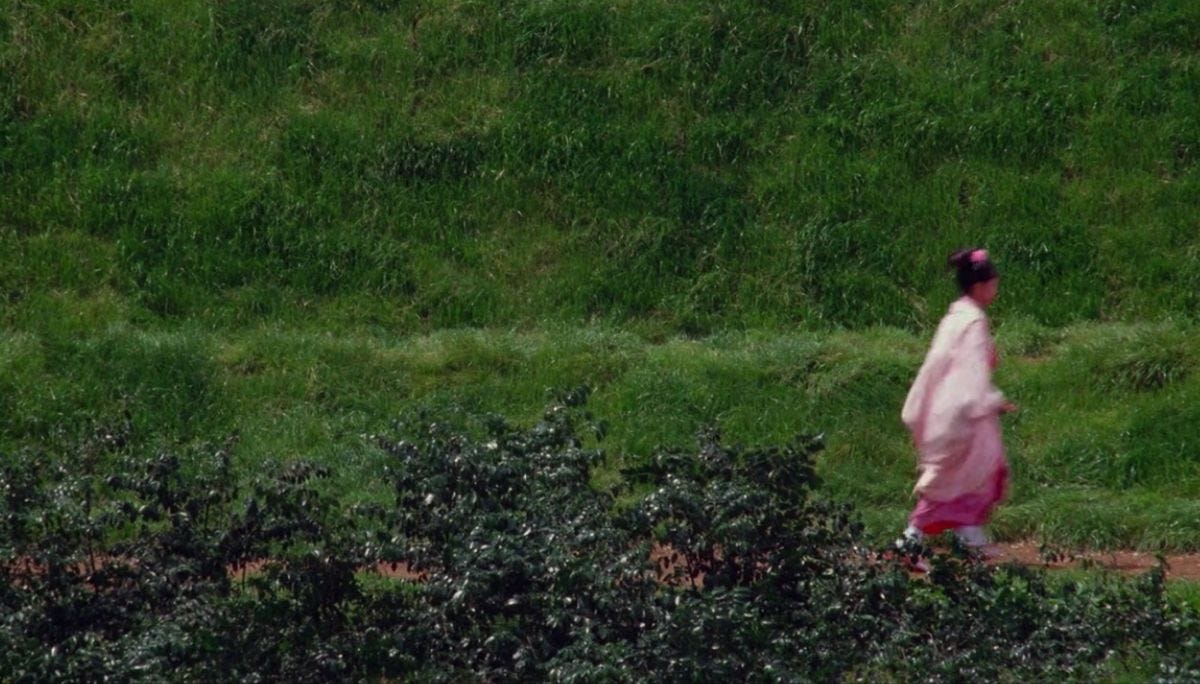
Guras, a film by Saurav Rai, has my favourite kind of protagonist—a spirited nine-year old girl who climbs trees to steal oranges from another’s orchard and leaps out of her classroom window to chase her beloved dog. She is delightful in what might be called a naïve way, because she doesn’t yet know or understand what simmers beneath her small, bright world: the cardamom fields her parents tend are failing, prices have plummeted, and they have been pushed to the edge by debt. She will move through this, to achieve what in storytelling and life we so earnestly call coming-of-age, and she will emerge as no longer the same person. What she will learn will turn her vulnerability—so present, so alive, the one Nussbaum names essential to living well—into something she will cautiously use to hedge against pain.
7.
There are consequences to caring deeply, feeling deeply. In the face of those consequences, unguarded joy is a choice. But no easy choice.
This is so beautiful and relatable!!!!
Loved reading this piece.